RAIDBORN Turns Skyrim’s Dungeon Habit Into a Focused, Addictive Grind
This low-poly first-person fantasy RPG trims away the open-world sprawl and doubles down on dungeon runs, loot, and steady progression. It doesn’t hit every swing cleanly, but its replayable structure, sharp optimization, and indie ambition give it a strong identity.
last updated Jun 05, 2026
RAIDBORN succeeds by cutting straight to the good part: first-person fantasy dungeon crawling without the bloated open-world baggage.
Dungeon Runs, Distilled
RAIDBORN knows exactly what kind of game it wants to be, and that clarity does a lot of the heavy lifting. Rather than chasing a giant open world full of distractions, it condenses the Elder Scrolls-style dungeon crawl into short, repeatable runs built around combat, loot, and progression. That structure makes it incredibly easy to slip into for half an hour and accidentally stay much longer, because the loop of raiding, returning, upgrading, and heading back out has real momentum. Procedural generation keeps dungeons familiar without making every run feel identical, even if repetition does creep in over time. For players who want first-person fantasy adventuring without committing to a second job disguised as a map screen, this focused approach is refreshingly practical.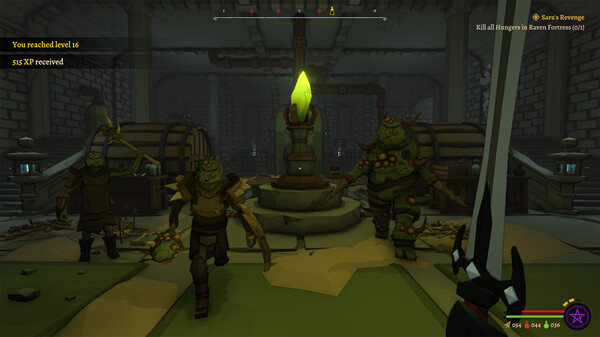
Steel, Stamina, and the Occasional Boot to the Face
Combat is where RAIDBORN is at its most satisfying and most uneven, sometimes within the same fight. Weapon variety is strong, builds are flexible, and the ability to mix melee, archery, stealth, and defensive play gives the game a welcome sense of ownership over your character. There is a nice rhythm to managing stamina, blocking properly, choosing when to commit to attacks, and using kicks or hazards to control space, especially once a build starts coming together. At the same time, the melee can feel a little floaty and less impactful than it wants to be, with some animations and hit feedback lacking the weight needed to fully sell every exchange. Even so, the combat loop remains fun because enemy pressure, traps, and build experimentation keep encounters active enough to overcome the occasional clunk rather than be buried by it.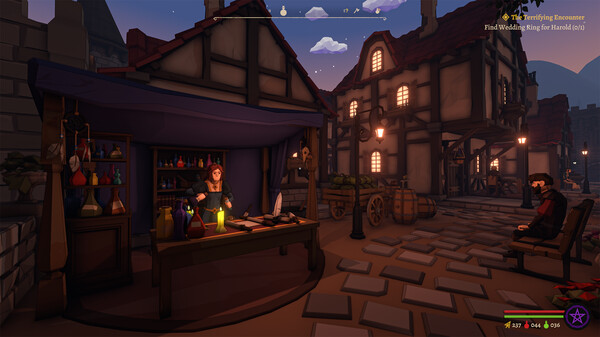
Loot Fever and Home Improvement
Progression is one of RAIDBORN’s biggest strengths because nearly every run feeds into something tangible. Loot pours in at a generous clip, crafting gives gear development more texture, and the lack of an inventory limit removes a lot of the genre’s usual bag-sorting nonsense, which is a small mercy in a world already full of chores. The outpost system adds another layer, letting you expand your base with crafting stations, utility rooms, and workers who can automate parts of your economy, and that creates a satisfying long-term sense of growth. It can be grindy in stretches, particularly when a desired room or utility upgrade feels like it is standing between you and a smoother pace, but the game usually justifies that effort by making each unlock useful. Respeccing also keeps experimentation painless, which is exactly the sort of quality-of-life choice more RPGs should steal immediately.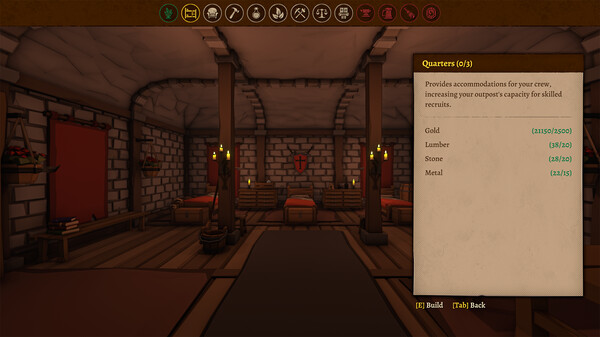
A World Built for Momentum, Not Majesty
Narrative takes a back seat here, and RAIDBORN is better judged by how it frames the action than by how deeply it develops its world. The main story exists, it moves you through the game, and it gives the dungeon loop enough purpose to feel directed, but it is not the reason to show up. Quest design leans heavily toward straightforward objectives, and while that can become repetitive, it also keeps the pace brisk and avoids drowning the game in filler pretending to be epic drama. Exploration is still rewarding in smaller ways, with hidden loot, secrets, side content, and bits of environmental curiosity giving towns and dungeons some extra texture. There is room for more enemy variety, stronger set-piece identity, and a more memorable payoff to the campaign, but the framework underneath is sturdy enough that future additions would feel like genuine expansion rather than repair work.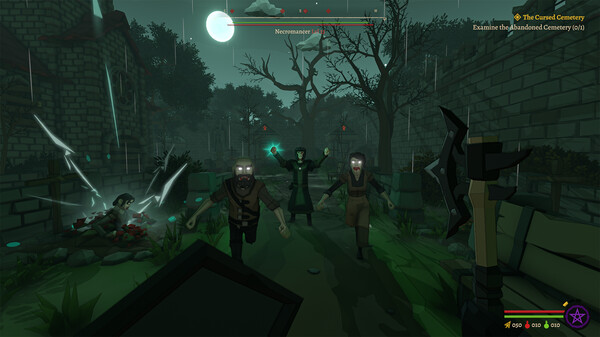
Low-Poly, High Efficiency
Visually, RAIDBORN makes a smart case for stylization over spectacle. Its low-poly fantasy look is clean and readable, the environments have enough atmosphere to support the dungeon-crawling mood, and the game often looks better in motion than screenshots might suggest. Weather effects, lighting, and environmental details do a lot to lift the aesthetic beyond simple retro minimalism, while the persistent clutter of bodies and loot helps sell the aftermath of combat in a pleasingly grim way. More importantly, performance is excellent, with consistently strong frame rates being one of the game’s most praised qualities across a wide range of setups. In an era where too many games treat optimization like an optional side quest, RAIDBORN running this smoothly feels almost rebellious.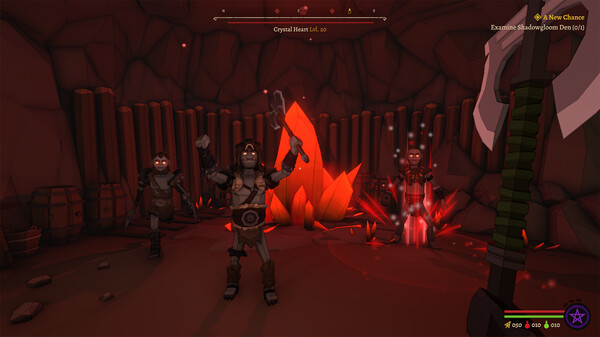
Voices in the Dark
The audio work is quietly effective even if it is not always flashy. Music does a lot to support the game’s immersive, adventurous tone, giving dungeon runs and quiet stretches back at base a welcome sense of place rather than leaving them to feel mechanically bare. Sound design in combat lands its essentials well enough, with weapons, impacts, and environmental hazards helping to keep encounters readable even when the physicality of melee does not always fully connect. Voice work is present in key places and helps give quests a bit more life than a wall of text would, though the delivery can feel merely serviceable rather than standout. Still, for a small-team project centered so heavily on repeatable content, the soundtrack and overall audio presentation do more than enough to keep the loop from sounding as repetitive as it could have.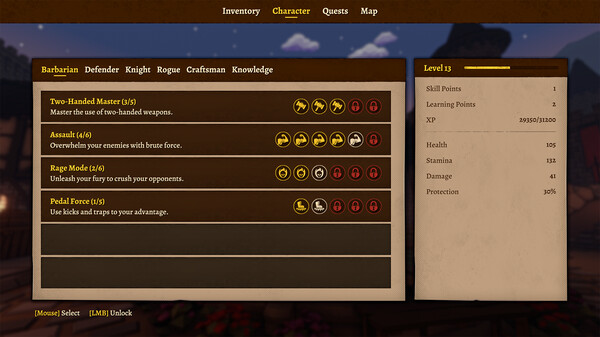
Friction Points Worth Knowing
RAIDBORN’s rough edges are real, but most of them feel like limitations of scope rather than signs of a game collapsing under itself. Dungeon themes and enemy sets eventually start to repeat a little too visibly, and some systems, especially lockpicking and parts of the base-management flow, can slip from quirky to mildly aggravating depending on your patience. A few common complaints about quest completion hiccups and isolated technical snags do surface, though the broader picture suggests a game that is generally stable and well maintained rather than broken. The bigger cloud hanging over it is less about minute-to-minute design and more about how some feature decisions around paid content have distracted from the game’s actual strengths, which is a shame because the core package has earned more goodwill than the conversation around it sometimes allows. Strip away that noise, and what remains is an earnest, smartly scoped dungeon crawler that gets an awful lot right for a project of this size.
STEAM RATING
Developer & Publisher
Phodex Games
Release Date
June 03, 2026
Verdict
RAIDBORN succeeds by cutting straight to the good part: first-person fantasy dungeon crawling without the bloated open-world baggage. Its combat does not always carry the weight or polish needed to fully match its best ideas, and repetition eventually shows through in the dungeons, enemies, and quest structure, but the overall loop is strong enough to keep pulling you back in for one more run. The outpost progression, flexible builds, excellent performance, and rewarding sense of momentum give the game a clear identity that feels especially impressive coming from a small-scale production. It may not be the next great fantasy RPG epic, and thankfully it rarely pretends to be, but as a focused, replayable action RPG built for players who want loot, growth, and a reliable dungeon fix, RAIDBORN is easy to enjoy.