ReStory: Chill Electronics Repairs Turns Retro Tinkering Into Cozy Compulsion
This repair-shop sim takes the simple pleasure of unscrewing old gadgets, cleaning out years of dust, and piecing them back together, then wraps it in a warmly nostalgic atmosphere with just enough story and progression to keep every job feeling personal.
last updated Aug 07, 2026
One of those dangerous “just one more repair” games that quietly eats entire evenings.
A Workshop Loop That Knows Exactly Why It’s Addictive
ReStory: Chill Electronics Repairs understands the primal satisfaction of taking something broken apart and making it whole again. The core loop is wonderfully tactile, with jobs asking you to unscrew panels, remove parts, clean grime, replace faulty components, order spares, and rebuild devices piece by piece. It never disappears into the kind of hardcore simulation detail that would require an engineering degree and a backup engineering degree, but it still feels authentic enough to sell the fantasy. That balance is the game’s real trick, because every repair remains approachable while still giving each successful restoration a small hit of pride. The result is one of those dangerous “just one more repair” games that quietly eats entire evenings and somehow makes you grateful for it.
Progression With a Pulse
What keeps the repair work from becoming rote is the way progression steadily opens the shop up without overwhelming the player. New licenses unlock more complex hardware, better tools improve your efficiency, and the economy gives you enough pressure to stay engaged without turning every day into a panic attack. Buying parts, taking on clean-only jobs, and poking around resale and salvage opportunities adds a light management layer that complements the hands-on work rather than burying it. It has the same inviting rhythm as the best sim games, where growth feels earned but never punishing. Even when the tasks themselves are repetitive by design, the cadence of upgrades, incoming devices, and small business decisions keeps the workbench feeling alive.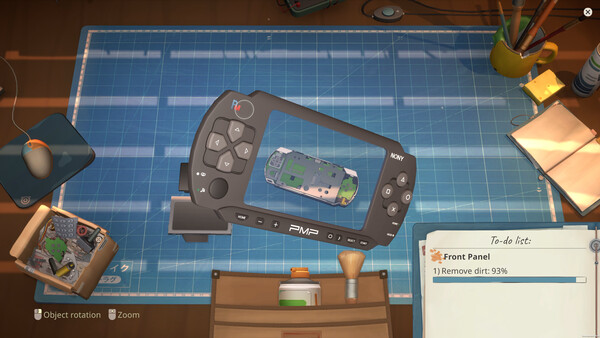
Stories Hidden Between the Screws
The game’s writing gives the shop more personality than a pure simulator usually bothers with. Customers come in with their devices, but also with fragments of their lives, and those interactions gradually build a wider narrative around the business and the people orbiting it. The dialogue is not trying to out-dramatize a prestige RPG, and that restraint works in its favor because the stories feel like an extension of the shop’s routine rather than a loud interruption to it. There is a welcome sense that the repairs matter beyond a cash payout, and that helps every order feel tied to a person rather than just another object on the mat. A few story beats can feel abrupt, but the cast is memorable enough and the structure is thoughtful enough that the narrative adds genuine texture to the sim instead of simply existing because somebody remembered games are supposed to have one.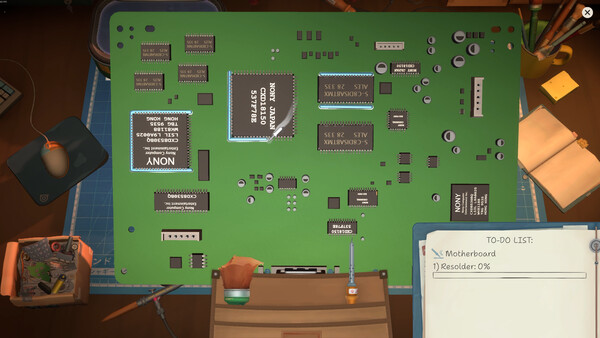
Nostalgia by Design, Not Just Name
Visually, ReStory is charming in a way that feels handcrafted rather than algorithmically assembled for maximum coziness. The mix of stylized character art, inviting interiors, and lovingly modeled gadgets gives the game a distinct identity, especially when you start handling devices that feel spiritually borrowed from the early 2000s without crossing into legal self-destruction. The star of the presentation is the hardware itself, with consoles, phones, handhelds, and music players rendered with enough detail to make every teardown satisfying. There is also a pleasant domesticity to the shop space, from the little decorative touches to the simple pleasure of glancing out the window between jobs. The setting occasionally feels more inspired by a broad pop-cultural memory of the era than a perfectly specific recreation of mid-2000s Tokyo, but the mood is strong enough that the game’s vibe still lands cleanly.
Soft Beats, Sharp Clicks
The audio work does a lot of the heavy lifting when it comes to keeping the game in that calm, locked-in headspace. Music drifts through the workshop with an easygoing, cozy energy that matches the slow ritual of cleaning and rebuilding electronics, while the tiny mechanical sound effects give the repair process its tactile snap. Screws coming loose, pieces clicking back into place, and tools doing their job all sound crisp enough to make mundane actions feel oddly luxurious. It is the kind of sound design that quietly reinforces the whole fantasy of being alone in a small shop, focused on careful work while time melts away. The only real weak point is that the soundtrack can start to feel a little too familiar over long sessions, which is a minor issue in a game specifically designed to make long sessions happen.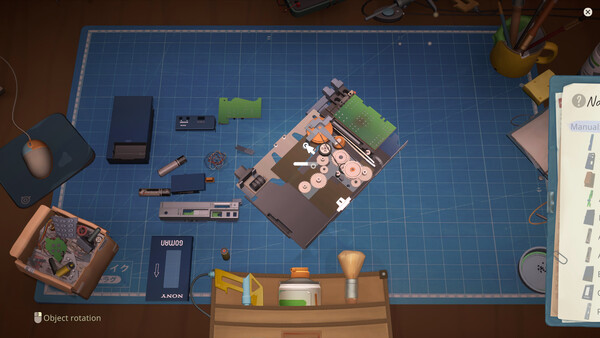
Performance, Comfort, and the Small Frictions
For a game built around precision and repetition, ReStory generally performs with admirable smoothness and readability. Reports of stable frame rates across a range of hardware line up with the game’s lightweight, polished feel, and the clean presentation helps it remain playable even on less powerful machines. That said, there are a few recurring usability snags worth noting, especially around visibility and input. Some screws can be harder to spot than they should be, certain small parts are a bit fiddly to grab, and the amount of clicking and holding required during longer sessions can create a touch more strain than a chill game ideally wants. None of these issues derail the experience, but they are the kind of tiny workshop annoyances that stand out precisely because the rest of the design is so smooth and easy to sink into.
STEAM RATING
Developer
Mandragora
Publisher
tinyBuild
Release Date
August 06, 2026
Verdict & Summary
ReStory: Chill Electronics Repairs is a terrific example of a small team making a focused idea shine. It takes a simple restoration loop, gives it tactile depth, wraps it in a cozy aesthetic, and supports it with enough progression and character-driven storytelling to make the whole thing feel far richer than its modest premise suggests. The atmosphere is warm, the gadget work is deeply satisfying, and the structure constantly nudges you toward one more repair, one more upgrade, one more in-game day that somehow turns into midnight in real life. A few interface quirks, some repetitive music, and occasional rough edges in story delivery keep it from total workshop nirvana, but they do little to dull its charm. For anyone with a soft spot for retro tech, low-stress sims, or simply the joy of fixing things that looked doomed, this is an easy recommendation and one of the coziest time thieves around.