Stardew Valley Review: The Cozy Giant That Quietly Eats Your Entire Week
What begins as a simple inheritance fantasy quickly unfolds into one of the richest life sims around, blending farming, friendship, dungeon crawling, and long-term progression into a game that still feels remarkable years later.
last updated Sep 04, 2026
It is cozy, yes, but it is also the kind of cozy that occasionally has you sprinting home at 1:40 AM with a backpack full of ore and regrets.
A Farm, A Clock, And A Mild Identity Crisis
Stardew Valley starts with a familiar setup: a neglected farm, a handful of tools, and the vague promise of a better life away from corporate misery. What makes it special is how fast that modest beginning opens into something much bigger than a crop-watering routine. Farming is only the entry point, because before long the game is juggling mining, fishing, foraging, crafting, relationship building, town events, and enough personal goal-setting to turn every in-game morning into a tiny strategic panic. The day structure keeps everything moving with real purpose, and that constant pressure to choose how to spend limited hours gives even relaxed sessions a satisfying edge. It is cozy, yes, but it is also the kind of cozy that occasionally has you sprinting home at 1:40 AM with a backpack full of ore and regrets.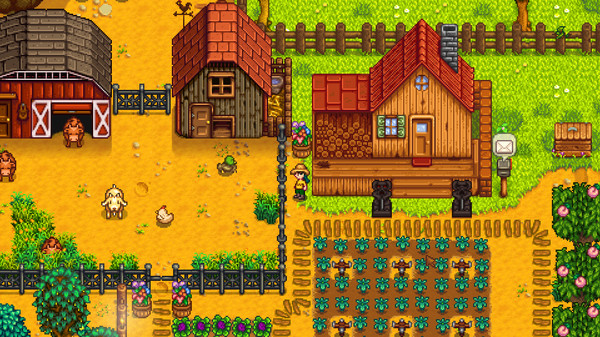
More Than Dirt And Parsnips
The brilliance of the gameplay is how many different playstyles it supports without ever feeling fractured. One save can become an efficient farming empire built on seasonal planning and artisan output, while another can lean into combat, fishing mastery, or simply getting to know the town at a slower pace. That flexibility gives the game incredible staying power, because there is always another route, another farm layout, another romance arc, or another personal challenge worth pursuing. Even its more demanding systems, especially fishing early on, ask for patience rather than perfection, and the reward is a loop that becomes deeply intuitive once it clicks. For a game with such simple controls and readable systems, it somehow delivers an absurd amount of depth without making a big theatrical fuss about it.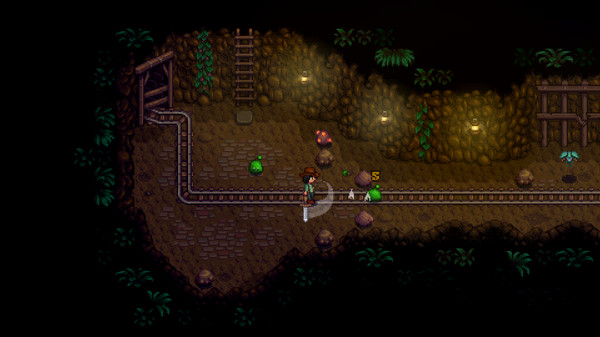
The Valley Feels Lived In
What truly elevates Stardew Valley above a lot of genre peers is the strength of its world and character writing. Pelican Town is not just a utility hub full of quest markers pretending to be people, but a place where routines, relationships, and bits of local drama create a genuine sense of community. The townsfolk are charming, flawed, occasionally frustrating, and consistently memorable, which makes friendship and romance feel like meaningful parts of the experience instead of decorative side systems. There is warmth in the game’s heart, but it never feels sugary to the point of losing texture, and that balance gives its quieter moments real staying power. By the time the seasons start passing and festivals return, the town begins to feel less like a map and more like a place you have history with.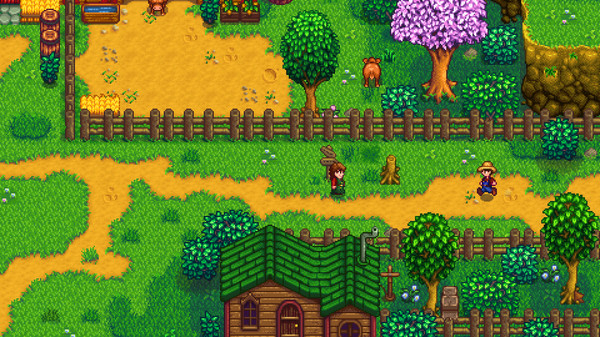
Pixel Art With Roots
Visually, Stardew Valley understands exactly what it needs to be and executes that vision with confidence. Its pixel art is clean, expressive, and timeless in a way that makes every season feel distinct, from lush spring fields to the stark calm of winter. The farms gradually transform from cluttered wasteland into personalized spaces full of character, and that visible sense of progress is one of the game’s most satisfying rewards. Performance is also a major strength, with the game running smoothly on a huge range of hardware, including low-spec machines and older laptops that would probably burst into flames if asked to render a blockbuster open world. That accessibility matters, because it means this is a game almost anyone can sink into without their PC sounding like it is preparing for liftoff.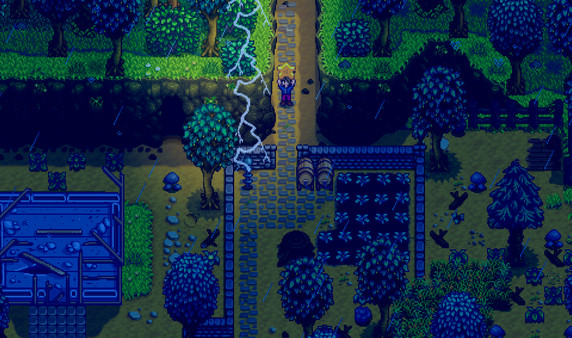
A Soundtrack That Does Half The Hugging
The audio design is one of the quiet MVPs here, and the soundtrack does an enormous amount of emotional heavy lifting without ever becoming intrusive. Each season carries its own mood through music that is gentle, melodic, and instantly tied to the rhythms of daily life in the valley. Exploration, rainy afternoons, festival days, and cave runs all get just enough musical identity to make the world feel richer without overstating anything. Sound effects are equally effective in their smaller role, from the repetitive comfort of watering crops to the sharp little cues that make resource gathering and combat feel tactile. It is the kind of soundtrack that seeps into your brain pleasantly, which is a nicer outcome than most things that seep into your brain.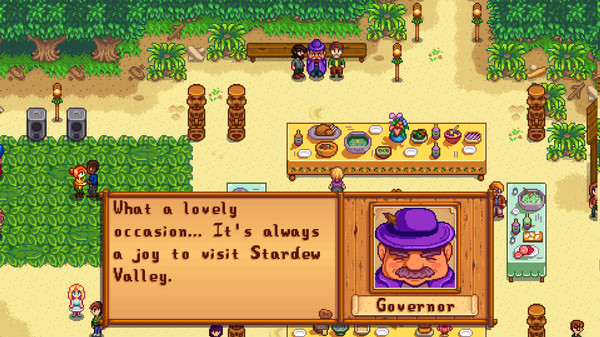
Years Later, Still Growing
Part of Stardew Valley’s enduring reputation comes from how generous it feels as a complete package. There is an extraordinary amount of value in the base game alone, and the long tail of replayability is strengthened by different farm types, evolving priorities, multiplayer support, and a modding scene that can dramatically expand the experience for returning players. Multiplayer, in particular, gives the valley a different energy, turning daily routines into collaborative chaos in a way that suits the game surprisingly well. Just as important, the steady support over the years has helped the game feel alive rather than preserved behind glass as a beloved relic. For an indie project built with remarkable clarity of vision, it still carries itself with more confidence and generosity than plenty of much larger productions.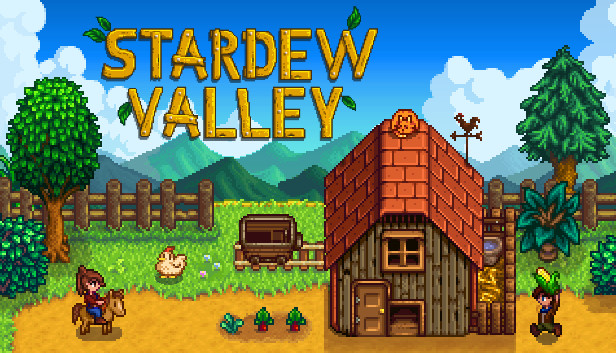
STEAM RATING
Developer & Publisher
ConcernedApe
Release Date
February 26, 2016
Verdict & Summary
Stardew Valley remains one of the defining indie successes because it takes a humble premise and fills it with an astonishing amount of care, freedom, and personality. Its farming loop is immediately inviting, but the real achievement is how naturally it branches into a life sim, social drama, light RPG, management game, and co-op obsession without losing its identity. The writing gives the town soul, the pixel art stays beautiful without trying too hard, and the soundtrack wraps everything in a warmth that never feels cheap. A few systems can be demanding at first and the short in-game days create a constant sense of pressure, but that tension is also part of what makes every season so compelling. For the price, the craftsmanship here is almost absurd, and it is very easy to understand why this quiet little farm game has become a forever home for so many players.